What Causes Brain Fog and Can Your Pharmacist Help?
That frustrating mental cloudiness — trouble concentrating, forgetting words, feeling mentally slow — has real, identifiable causes. And your Ottawa pharmacist may be the first person who can help you get to the bottom of it.
What Is Brain Fog, Exactly?
Brain fog is not a medical diagnosis on its own — it is a cluster of symptoms that many patients describe as feeling mentally sluggish, forgetful, unfocused, or mentally exhausted even after rest. You might find yourself re-reading the same sentence repeatedly, struggling to find words mid-conversation, or simply feeling like your thoughts are moving through thick mud. It is surprisingly common, and yet many people suffer for months or years without ever identifying the underlying cause.
The good news is that brain fog is rarely a sign of something serious on its own. In most cases, it has identifiable, treatable causes — and your community pharmacist in Ottawa is uniquely positioned to help you work through them.
Common Causes of Brain Fog
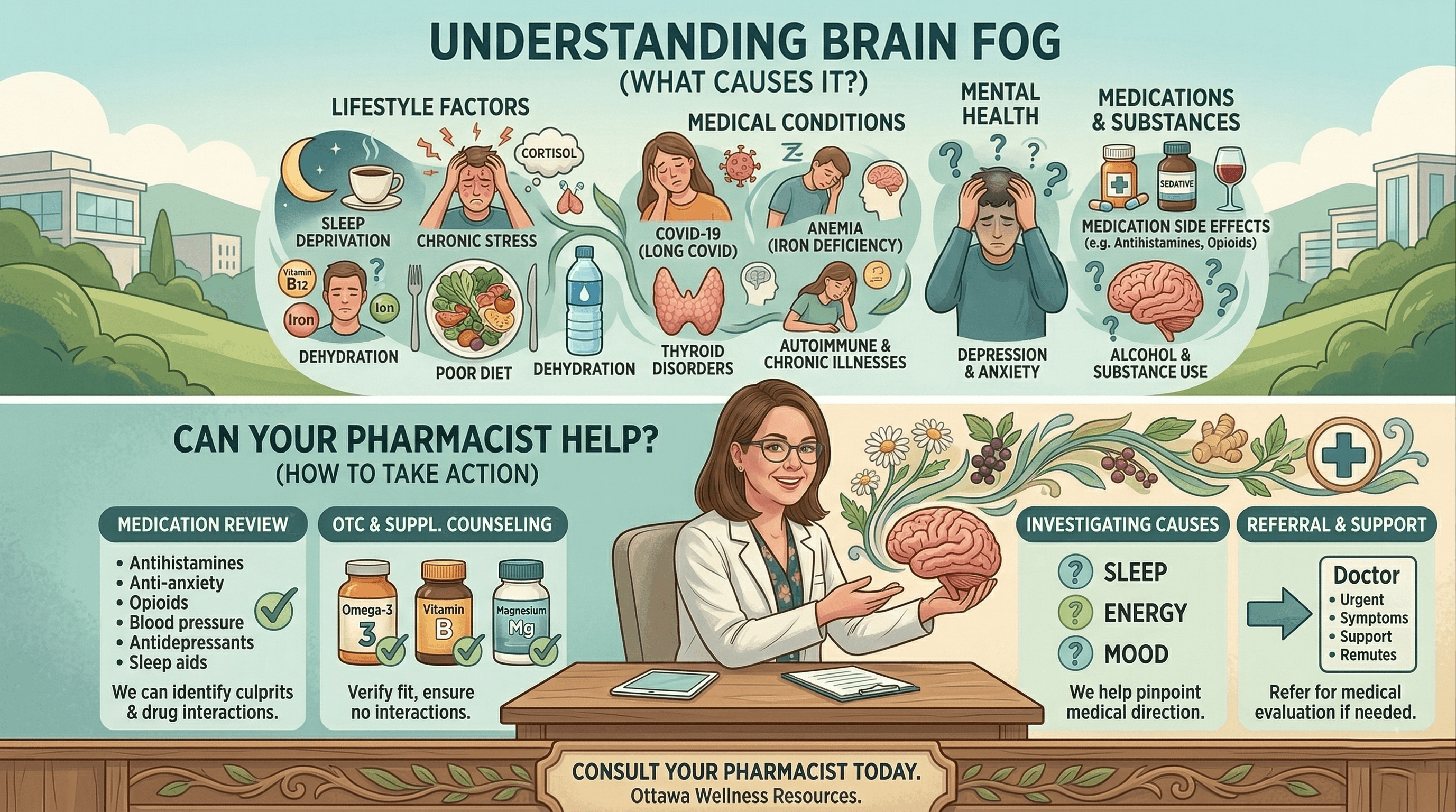
Brain fog can stem from a wide range of physical and lifestyle factors. The most common causes seen in community pharmacy practice include:
Other contributing factors include iron deficiency anemia, blood sugar dysregulation (both hypoglycemia and uncontrolled diabetes), hormonal fluctuations during perimenopause, post-viral syndromes (including long COVID), and certain autoimmune conditions. The wide variety of possible causes is precisely why a thorough medication and health review is so valuable.
How Your Pharmacist Can Help
Many patients are surprised to learn just how much a pharmacist can do when it comes to brain fog. Here at Longfields Pharmacy in Nepean, we approach brain fog the same way we approach any medication-related concern — systematically and collaboratively.
- 1MedsCheck — A Full Medication ReviewThrough Ontario's MedsCheck program (free for patients on 3+ medications), our pharmacist reviews every prescription and over-the-counter medication you take. Many common drugs — including allergy medications, sleep aids, and antidepressants — have cognitive side effects that accumulate over time. We identify problematic combinations and make recommendations to your prescriber.
- 2Identifying Nutrient Deficiency PatternsCertain medications deplete key nutrients. Metformin depletes B12. Proton pump inhibitors (PPIs) reduce absorption of B12, magnesium, and iron. Statins can reduce CoQ10. We can flag these patterns and recommend appropriate supplementation or referral for blood work.
- 3Referral for Blood TestsIf we suspect a thyroid issue, B12 deficiency, anemia, or blood sugar problem based on your symptoms and medication history, we can recommend that you ask your family doctor for specific blood tests — or direct you to appropriate lab resources.
- 4OTC Sleep Support GuidanceIf poor sleep is contributing to your brain fog, we can walk you through evidence-based options including melatonin (correct dosing and timing matters), magnesium glycinate, and sleep hygiene strategies. We will also flag if sleep medications you are already taking may be making things worse.
- 5Stress and Supplement CounsellingWe can discuss adaptogenic supplements like ashwagandha, the role of omega-3 fatty acids in brain health, and evidence-based approaches to managing stress-related cognitive symptoms — helping you make informed choices about what is worth trying.
When Should You See a Doctor?
While most cases of brain fog have manageable, non-serious causes, there are warning signs that warrant a medical evaluation beyond what a pharmacist can provide. See your family doctor promptly if your brain fog:
- Came on suddenly rather than gradually
- Is accompanied by severe headaches, vision changes, or weakness
- Involves significant memory loss or confusion affecting daily activities
- Is paired with unexplained weight loss or gain, excessive thirst, or hair loss
- Has persisted for more than 3 months without an identifiable cause
- Is worsening progressively over time
Your pharmacist can help you decide whether your symptoms warrant an urgent visit or whether a scheduled appointment with your family doctor is more appropriate. We work alongside your broader healthcare team — not in isolation from it. If you do not have a family doctor, we can also point you toward Ottawa resources for unattached patients.
Book a MedsCheck at Longfields Pharmacy
If you are taking three or more prescription medications and experiencing brain fog, a MedsCheck at Longfields Pharmacy is a great first step. The appointment is covered by OHIP, takes about 30–45 minutes, and gives you a comprehensive picture of how your medications may be affecting your cognitive health. We serve patients in Nepean, Barrhaven, Riverside South, and across Ottawa's west end.
Related Articles
Medical Disclaimer: The information in this article is intended for general informational purposes only and does not constitute medical advice. Always consult your pharmacist or physician before making any changes to your medications, treatments, or health routine.