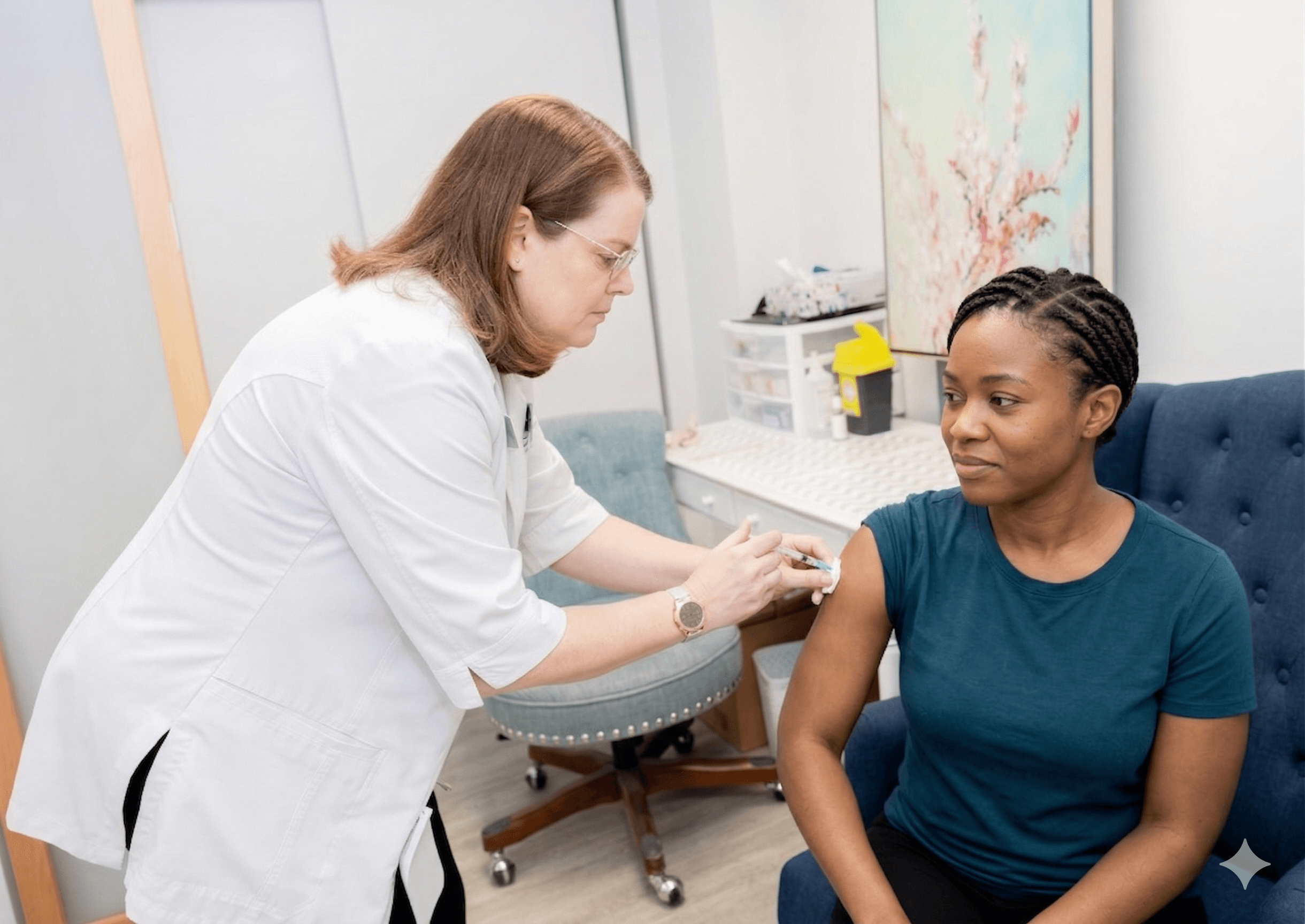
Shingrix Vaccine Ottawa — Who Needs It and What Does It Cost?
Shingles affects 1 in 3 Canadians in their lifetime, and the pain can be debilitating. Shingrix is over 90% effective at preventing it. Here's what Ottawa residents need to know about cost, coverage, and who should get vaccinated.
What Is Shingles?
Shingles (herpes zoster) is not a separate infection — it is a reactivation of the varicella-zoster virus, the same virus that causes chickenpox. If you had chickenpox as a child (which most Canadians over 50 did, before widespread vaccination), the virus never fully left your body. It remains dormant in your nerve tissue, kept in check by your immune system. When immunity weakens — as it naturally does with aging, illness, or stress — the dormant virus can reactivate and travel along nerve pathways to the skin, causing the characteristic shingles rash.
Approximately 1 in 3 Canadians will develop shingles at some point in their lifetime. The risk increases significantly with age: by age 85, roughly half of people who had chickenpox will have experienced at least one shingles episode. The condition is not just a skin rash — it can be an extremely painful, life-disrupting illness with serious potential complications.
Symptoms and Complications of Shingles
Shingles typically begins with 2–4 days of burning, tingling, or shooting pain on one side of the body or face, followed by a cluster of fluid-filled blisters that form a band along the affected nerve pathway. Common locations include the chest, torso, or around the eye. The rash usually heals within 2–4 weeks, but for many patients, the ordeal is far from over.
The most feared complication of shingles is postherpetic neuralgia (PHN) — a condition where nerve pain persists for months or even years after the rash heals. PHN occurs in approximately 10–20% of shingles cases overall, but in up to 30–40% of cases in adults over 70. The pain can be constant, severe, and profoundly disabling, interfering with sleep, daily activities, and quality of life. Other complications include:
- Vision loss or eye damage if shingles affects the eye (herpes zoster ophthalmicus)
- Hearing loss or facial paralysis (Ramsay Hunt syndrome)
- Bacterial skin infection of the blistered area
- Pneumonia, encephalitis, or other serious complications in immunocompromised individuals
- Significant psychological impact — anxiety, depression, and social withdrawal from chronic pain
Who Is at Risk?
While anyone who has had chickenpox can develop shingles, the risk is substantially higher for:
- Adults aged 50 and over — risk doubles with each decade after 50
- People with weakened immune systems (cancer, HIV, organ transplant recipients, those on immunosuppressant drugs)
- Adults experiencing high stress or major life events
- People with diabetes, chronic lung disease, or other conditions affecting immune function
- Individuals who have had shingles before — you can get it more than once
Shingrix vs. Zostavax — What Is the Difference?
There are two shingles vaccines: the older Zostavax (a live attenuated vaccine) and the newer Shingrix (a recombinant subunit vaccine). The difference in effectiveness is dramatic: Zostavax reduces shingles risk by approximately 51% and PHN risk by 67%. Shingrix, by contrast, is more than 90% effective against shingles across all age groups studied, and over 88% effective against PHN.
Shingrix Dosing Schedule
Shingrix is given as a two-dose series. The second dose is administered 2 to 6 months after the first. The National Advisory Committee on Immunization (NACI) recommends Shingrix for all adults aged 50 and over, and for adults aged 18 and over with conditions that increase their risk of shingles (such as immunocompromising conditions). Both doses are needed for optimal, long-lasting protection. Do not skip the second dose — the full two-dose series is what achieves the 90%+ efficacy.
How Much Does Shingrix Cost in Ontario?
This is where many Ottawa patients are surprised to learn the details. Ontario does provide a free shingles vaccine for adults aged 65 and over — however, the publicly funded program in Ontario currently provides Zostavax, not Shingrix. If you want Shingrix (which is strongly recommended by NACI for its superior effectiveness), it is not publicly funded for most Ontarians and must be paid for privately.
The current cost of Shingrix is approximately $170–$190 per dose, meaning the full two-dose series costs roughly $340–$380 before any insurance coverage. This is a meaningful expense, but consider it in context: treating shingles and managing postherpetic neuralgia can involve multiple doctor visits, prescription antivirals, pain medications, and specialist consultations — and the human cost of months of debilitating pain is immeasurable.
Many private and employer-sponsored drug plans cover Shingrix. Check your plan's coverage under "vaccines" or "preventive care." Some plans have annual maximums or require prior authorization. Our pharmacists at Longfields can help you check your coverage and submit the claim on your behalf.
Side Effects of Shingrix
Shingrix produces more robust immune reactions than many vaccines, which reflects its strong effectiveness — but it also means side effects are more common and often more noticeable than patients expect. The most frequently reported reactions include soreness, redness, and swelling at the injection site, as well as fatigue, headache, shivering, fever, and muscle pain for 2–3 days after each dose. These are signs your immune system is mounting a strong response.
Side effects are typically more pronounced after the second dose. We recommend scheduling your second Shingrix dose on a day when you can rest afterward if needed — avoid booking it right before an important event. Paracetamol or ibuprofen can help manage discomfort after vaccination. Serious side effects are rare.
Getting Shingrix at Longfields Pharmacy
Longfields Pharmacy in Nepean administers Shingrix and other immunizations for eligible adults. We recommend booking your appointment in advance to ensure vaccine availability. Bring your insurance card so we can check your drug plan coverage before you receive your first dose.
If you are 50 or older and haven't received Shingrix, we strongly encourage speaking with our pharmacist about whether it is right for you. The brief inconvenience and cost of vaccination is far outweighed by the significant protection it provides against a condition that can be genuinely devastating for older adults.
Related Articles
Medical Disclaimer: The information in this article is intended for general informational purposes only and does not constitute medical advice. Always consult your pharmacist or physician before making any changes to your medications, treatments, or health routine.